Molecular-Level Microscopy—UloveBio Luminescence Series Products


Bioluminescence is a natural phenomenon produced by marine organisms, bacteria, fungi, and insects, among others. Among these, the D-luciferin/luciferase system of fireflies is the most extensively studied tool, distinguished by its ATP-dependent substrate activation, high quantum yield of up to 41%, emission wavelength of 558 nm, as well as its excellent stability and low toxicity. It is widely used in bioimaging and ATP detection.
- Recent Advances
- Product Information
Bioluminescence is a natural phenomenon produced by marine organisms, bacteria, fungi, and insects, among others. Among these, the firefly D-luciferin/luciferase system is the most extensively studied tool, uniquely requiring ATP to activate its substrate, with a high quantum yield of 41% and an emission wavelength of 558 nm. It also exhibits excellent stability and low toxicity, making it widely applicable in bioimaging and ATP detection. Bioluminescent products are hailed as "microscopes at the molecular level" in drug development, with their ingenious applications spanning the following areas:
1. Kinase Activity Assay
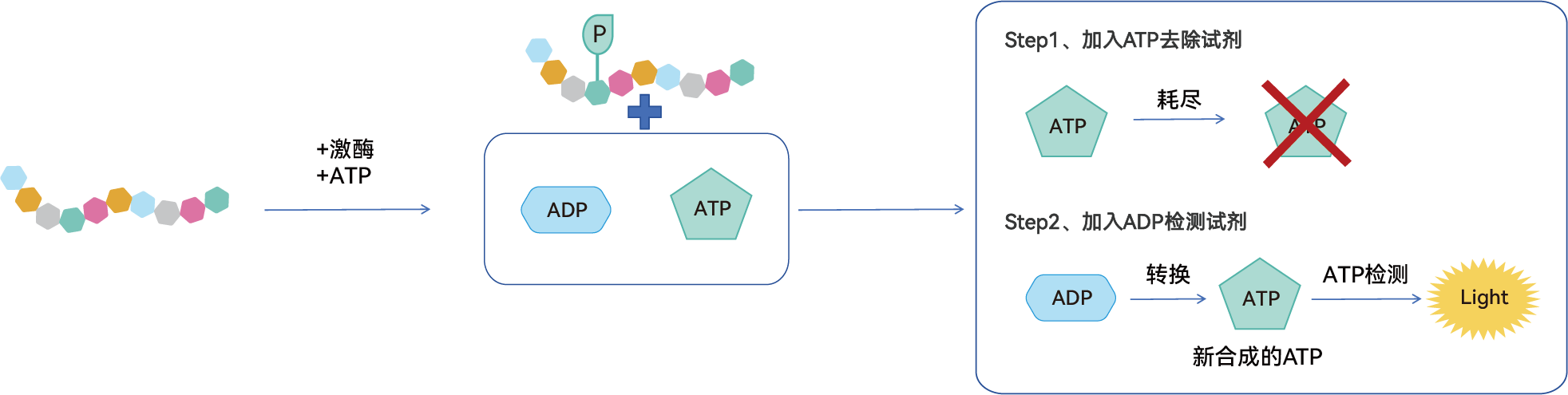
UA-Glo® Kinase ADP Assay (the only domestically developed product with independent intellectual property rights, performance comparable to international brands).
This is a homogeneous, wash-free, ultra-sensitive kinase activity detection technology based on bioluminescence principles. Its design core lies in an ingenious two-step cascade enzymatic reaction that efficiently converts the low-abundance product adenosine diphosphate (ADP) from kinase catalysis into a quantifiable chemiluminescent signal.
2. ATP Detection
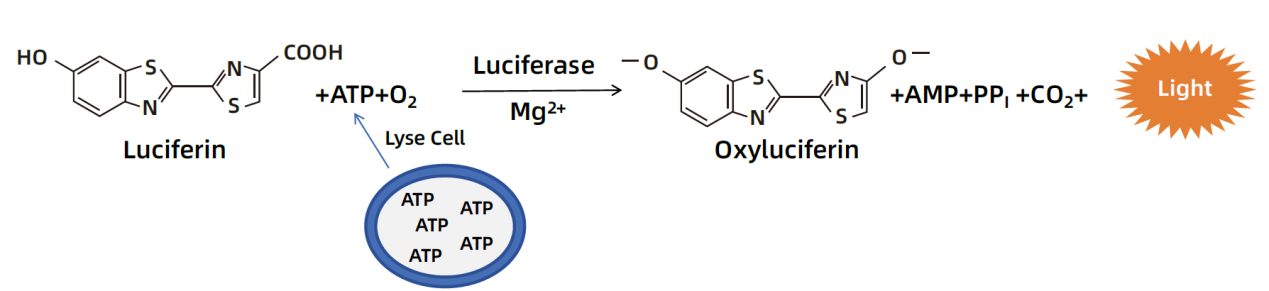
ATP is the energy currency of living cells, present in almost all prokaryotic and eukaryotic cells. Since Mg-ATP is an essential cofactor in the firefly bioluminescence mechanism, the firefly luciferase and D-luciferin system has been developed into various ATP detection methods with different ATP detection limits. The Luminescent Cell Viability Assay kit is an indispensable high-throughput tool in drug development for assessing cell viability and proliferation. Its role extends far beyond a simple "cell activity test," deeply integrating into multiple critical stages of drug discovery and development. From massive compound screening, lead compound optimization, mechanism exploration to early toxicity assessment, it significantly accelerates decision-making in drug development, reduces costs and risks, and serves as a cornerstone technology in modern drug discovery laboratories.
3. Reporter Gene Assay
Utilizing the luciferase reporter gene system to rapidly screen candidate compounds or antibodies that can activate or inhibit the expression of specific genes, biological activity determination, ADCC (antibody-dependent cellular cytotoxicity) effect detection, immune checkpoint inhibitor activity detection (e.g., anti-PD-1/PD-L1 antibodies), bispecific antibody activity detection, signal pathway research and target validation, detection of Wnt/β-catenin, NF-κB, p53, and other tumor signaling pathway activation states. The luciferase reporter gene can also be linked to CAR-T cell activation-related elements to monitor tumor antigen-triggered CAR-T cell activation status in real-time. The UA reporter gene product line comprehensively covers various types, including lysate, secreted, and live-cell detection, making it the domestic supplier with the most complete range of reporter gene detection kits.

4. Protein Interaction
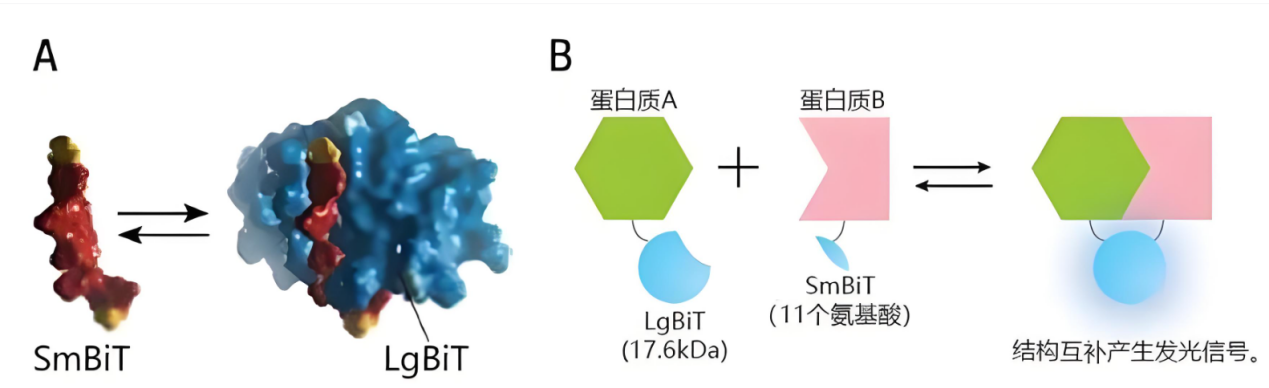
Promega's NanoLuc® technology splits the luciferase protein molecule into two distinct fragments, each expressed separately. The two fragments exhibit high affinity and can rapidly and automatically form a complete enzyme molecule with luciferase activity in the same reaction system. This technology is used to detect protein interactions or target protein degradation.
About UA BIOSCIENCE
Nanjing UA BIOSCIENCE Co., Ltd. (UA BIOSCIENCE) is a subsidiary of Unibio specializing in recombinant protein R&D and production. UA provides various protein-based reagents for basic research, drug development, cell therapy, and gene therapy, including target proteins, cytokines, tool enzymes, and related protein-level detection kits. It is committed to offering high-quality products and professional services to clients in the life sciences field. UA consistently upholds a craftsmanship spirit of excellence, leveraging a professional technical team, rich product development experience, and a mature market layout to provide clients with higher-standard products and services. Additionally, relying on the group's new R&D and production facilities, it comprehensively covers needs from R&D to pilot-scale production, helping clients overcome raw material bottlenecks.
About NEUBO APPTECH
Ningbo NEUBO APPTECH Co., Ltd. (NEUBO APPTECH) is an innovative biotechnology company focused on the R&D and production of high-end biological reagents. Headquartered in Ningbo High-Tech Zone, the company primarily provides reagent products and method development services to drug R&D and life science research institutions, including pharmaceutical companies, drug research institutions, CROs, and academic institutions. The company's leadership comprises several overseas returnees with over 20 years of experience in drug R&D. NEUBO APPTECH's current main technologies and products cover luciferase detection systems and various novel fluorescence detection systems, characterized by high sensitivity, excellent reproducibility, and strong stability, with performance leading among domestic counterparts. Its Kinase ADP Assay Kit is the only domestically developed product with independent intellectual property rights for detecting kinase or ATP hydrolase activity. Grounded in robust technical expertise and guided by rigorous scientific standards and a dedicated corporate spirit, NEUBO APPTECH is committed to providing top-tier R&D reagents for life science research.
On February 4th, Unibio completed a multi-million-yuan exclusive strategic investment in Ningbo NEUBO APPTECH Co., Ltd. ("NEUBO APPTECH"). The funding will be used for R&D in drug discovery-related high-end reagents. Through this strategic investment, UA BIOSCIENCE will further deepen its industrial layout in high-end biological reagents and detection technologies for drug discovery, continuously allocate resources to support the iterative upgrade of related technologies and products, and leverage its own channels and service systems to provide more comprehensive one-stop solutions for research institutions and drug development clients.
This article is reviewed and published by the technical expert team of UA
Disclaimer: This article partially utilizes artificial intelligence assistance in its creation. If any content involves copyright or intellectual property issues, please let us know and we promise to verify and remove it as soon as possible.
Purchase recombinant protein, choose 
UA protein focuses on providing various protein reagents, raw materials, and services required for drug research and development, cell therapy, gene therapy, and basic scientific research, including drug target proteins, immune checkpoint proteins, cytokines, tool enzymes, customized protein expression, and full-length transmembrane protein development. Nanjing Univ is committed to providing customers with high-quality products and professional services, and building a High-tech Biological Enterprise with International Competitiveness.







 Business license (three certificates in one)