Could ACSL5 be the next blockbuster target after PD-1 and GLP-1?


Cross-disciplinary breakthrough from fatty acid metabolism to precision medicine: In the treatment of metabolic diseases and malignant tumors, a molecule called ACSL5 (acyl-CoA synthetase long-chain family member 5) is quietly becoming a focus of attention in the pharmaceutical industry.
- Recent Advances
- Product Information
Cross-disciplinary breakthrough from fatty acid metabolism to precision medicine: In the treatment of metabolic diseases and malignant tumors, a molecule called ACSL5 (Acyl-CoA Synthetase Long-Chain Family Member 5) is quietly becoming the focus of the pharmaceutical industry. As a key gatekeeper in the fatty acid metabolic pathway, ACSL5 not only regulates the body's energy balance but also plays multiple roles in the tumor microenvironment, immune regulation, and metabolic syndrome.
Target Mechanism: The "Traffic Commander" of Cellular Energy Metabolism
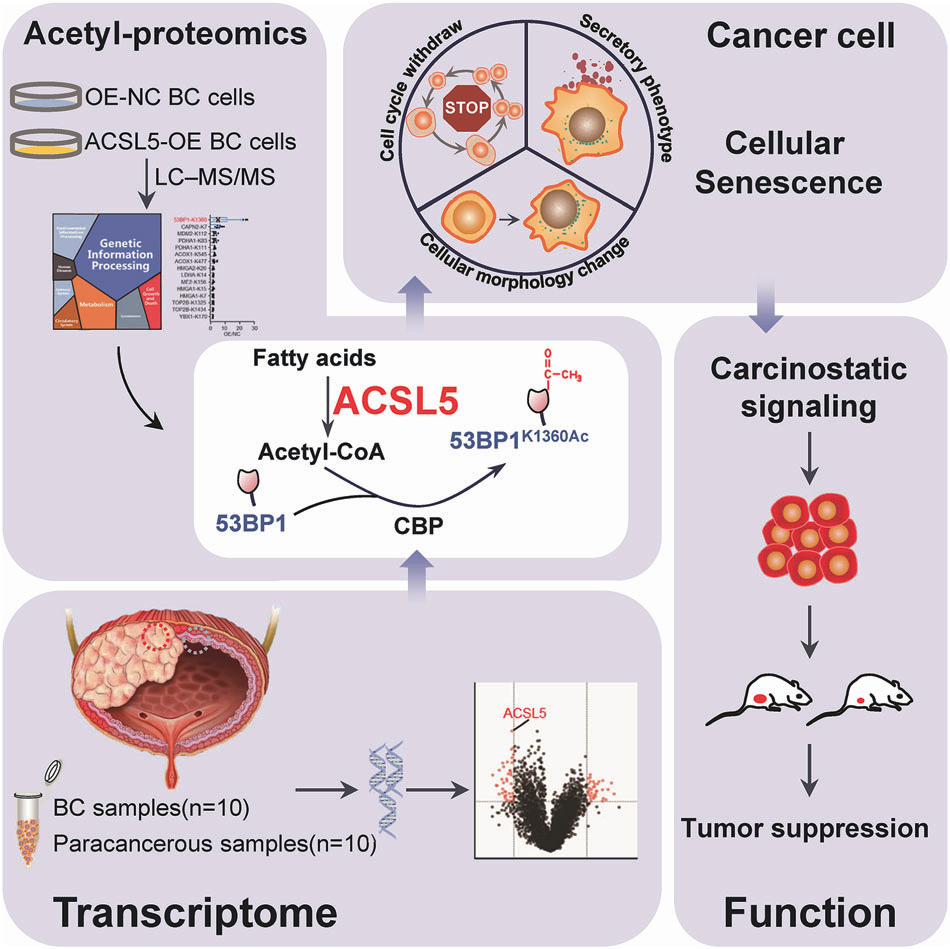
Source: Oncogene
ACSL5 promotes fatty acid oxidation (FAO), reduces intracellular lipid accumulation, and increases acetyl-CoA levels; acetyl-CoA promotes protein acetylation, thereby inducing cellular senescence.
ACSL5 belongs to the long-chain acyl-CoA synthetase family and is primarily responsible for catalyzing the binding of long-chain fatty acids (C16-C20) with coenzyme A to generate fatty acyl-CoA. This seemingly simple biochemical reaction is actually a watershed in cellular energy metabolism:
- Lipid synthesis pathway: The generated acyl-CoA enters the endoplasmic reticulum to synthesize storage lipids such as triglycerides and phospholipids.
- β-oxidation pathway: Acyl-CoA enters the mitochondria and is oxidized to produce energy.
- Signal transduction: Regulates the Wnt signaling pathway, apoptosis, and inflammatory responses.
The uniqueness of ACSL5 lies in its tissue-specific expression—it is highly enriched in the liver, small intestine, adipose tissue, and skeletal muscle, making it an ideal target for regulating systemic metabolism.
Breakthrough 1: The "Brake System" for Obesity and Metabolic Syndrome
A groundbreaking study in 2024 revealed that ACSL5 is a key switch for regulating body weight and metabolic health. The world's first ACSL5 gene knockout mouse model showed that mice lacking ACSL5 could significantly resist obesity, insulin resistance, and fatty liver even when fed a high-fat diet.
Even more exciting, the research team successfully developed an oral small-molecule ACSL5 inhibitor, LP-856866. This drug demonstrated remarkable effects in diet-induced obese mice:
- Significantly reduced food intake for 28 consecutive days
- Improved glucose tolerance and insulin sensitivity
- Lowered serum triglyceride and total cholesterol levels
- Key advantage: Fat loss with minimal lean body mass loss
Mechanistic studies found that ACSL5 inhibition works by activating the ileal brake mechanism—unabsorbed free fatty acids stimulate intestinal L cells to release GLP-1, delaying gastric emptying and inducing satiety. This discovery provides a new approach for developing next-generation weight-loss drugs.
Breakthrough 2: New Metabolic Intervention Strategy for Cancer Treatment
In the field of oncology, ACSL5 exhibits a "double-edged sword" characteristic, with its expression levels closely related to prognosis:
Pancreatic cancer: A rising star in prognostic markers
A 2019 study published in OncoTargets and Therapy confirmed that low ACSL5 expression is an independent risk factor for poor prognosis in pancreatic cancer patients. Patients with high ACSL5 expression had significantly prolonged progression-free survival, suggesting its anti-tumor proliferation effects. Multivariate analysis showed that ACSL5 expression levels, along with tumor stage and differentiation grade, form a prognostic evaluation system.
Non-small cell lung cancer: The tumor-suppressing mediator of palmitic acid
The latest 2024 study found that in non-small cell lung cancer (NSCLC) cells treated with palmitic acid (C16:0), ACSL5 is the master regulator of cell proliferation and migration. The study confirmed:
- Palmitic acid inhibits A549 cell proliferation by upregulating ACSL5 expression
- ACSL5 knockout blocks the anti-tumor effects of palmitic acid
- The mechanism involves regulation of the ERK signaling pathway
Notably, ACSL5 expression in lung cancer tissues is negatively correlated with the proliferation marker Ki67, further supporting its tumor-suppressing role.
Combination therapy strategy
Studies on the broad-spectrum ACSL family inhibitor Triacsin C showed that ACSL5 inhibition can enhance the sensitivity of chemotherapy drugs like gemcitabine and targeted drugs like gefitinib, providing a new approach to overcoming tumor resistance.
Breakthrough 3: Skin Immunity and Inflammatory Diseases
A study published in April 2025 in Scientific Reports first revealed the key role of ACSL5 in rosacea. The study found:
- ACSL5 is significantly upregulated in rosacea lesions
- ACSL5 is closely related to M1-type macrophage infiltration
- It acts as a "bridge gene" connecting lipid metabolism disorders and innate immunity
The study proposed that developing selective ACSL5 inhibitors may become a new strategy for treating rosacea, filling the gap in targeted dermatological therapies.
Clinical Translation Prospects: From Lab to Bedside
Drug development advantages
- Clear druggability: ACSL5 has a well-defined active pocket, making small-molecule inhibitor development feasible
- Safety window: Gene knockout mice showed no severe adverse reactions, indicating a wide therapeutic window
- Multi-indication potential: Covers obesity, diabetes, non-alcoholic fatty liver disease, cancer, and inflammatory diseases
Pipeline developments
- LP-856866: The first ACSL5-specific inhibitor to enter preclinical development, with proof-of-concept validation completed
- Triacsin C derivatives: Optimization of broad-spectrum ACSL family inhibitors is underway
- Targeted delivery systems: Leveraging ACSL5's specific distribution in the gut and liver to develop organ-selective drugs
ACSL5 is not just a metabolic enzyme but also a hub connecting nutrient sensing, energy balance, and cell fate determination. In an era of growing demand for precision medicine and metabolic health, innovative therapies targeting ACSL5 are poised to become the next blockbuster drugs, offering new hope to hundreds of millions of patients worldwide with metabolic diseases and cancer.
This article is reviewed and published by the technical expert team of UA
Disclaimer: This article partially utilizes artificial intelligence assistance in its creation. If any content involves copyright or intellectual property issues, please let us know and we promise to verify and remove it as soon as possible.
Purchase recombinant protein, choose 
UA protein focuses on providing various protein reagents, raw materials, and services required for drug research and development, cell therapy, gene therapy, and basic scientific research, including drug target proteins, immune checkpoint proteins, cytokines, tool enzymes, customized protein expression, and full-length transmembrane protein development. Nanjing Univ is committed to providing customers with high-quality products and professional services, and building a High-tech Biological Enterprise with International Competitiveness.







 Business license (three certificates in one)