




The biological characteristics of IL-1β and its mechanism in inflammation regulation


The interleukin-1 (IL-1) family holds a unique position in the immune system, primarily participating in innate immune responses compared to other cytokine families.
- Recent Advances
- Product Information
I. Introduction
The interleukin-1 (IL-1) family holds a unique position in the immune system, primarily participating in innate immune responses compared to other cytokine families. Innate immunity, with inflammation as its core manifestation, serves as the body's first line of defense against pathogenic microorganisms. IL-1 family cytokines dominate innate immunity by triggering inflammatory cascades through IL-1 receptor activation while also participating in the regulation of adaptive immunity. This article systematically elaborates on the regulatory mechanisms of IL-1β production, its biological functions, and its role in disease pathogenesis. In related mechanism studies, the Human IL-1β Kit (HICA) serves as a quantitative detection tool widely used for measuring IL-1β levels in cell culture supernatants, serum, and tissue samples, providing crucial data support for inflammation mechanism analysis.
II. Overview of the IL-1 Family
(1) Family Member Composition
The IL-1 family mainly includes two agonistic cytokines: IL-1α and IL-1β; one endogenous receptor antagonist: IL-1RA; and two receptors: IL-1RI and IL-1RII. Additionally, the IL-1R accessory protein (IL-1RAcP) participates in forming the signal transduction complex after IL-1 binds to IL-1RI and is essential for downstream signal activation.
(2) Receptor System and Signal Transduction
Both IL-1α and IL-1β initiate signal transduction by binding to IL-1RI. IL-1RII, lacking an intracellular signaling domain, cannot induce signal transmission upon IL-1 binding and is thus called a decoy receptor. When IL-1 binds to IL-1RI, IL-1RAcP is recruited to the cell membrane to form a high-affinity receptor complex, subsequently activating intracellular signaling cascades. IL-1RA functions as a natural inhibitor by competitively binding to the receptor, blocking IL-1's interaction with its receptor.
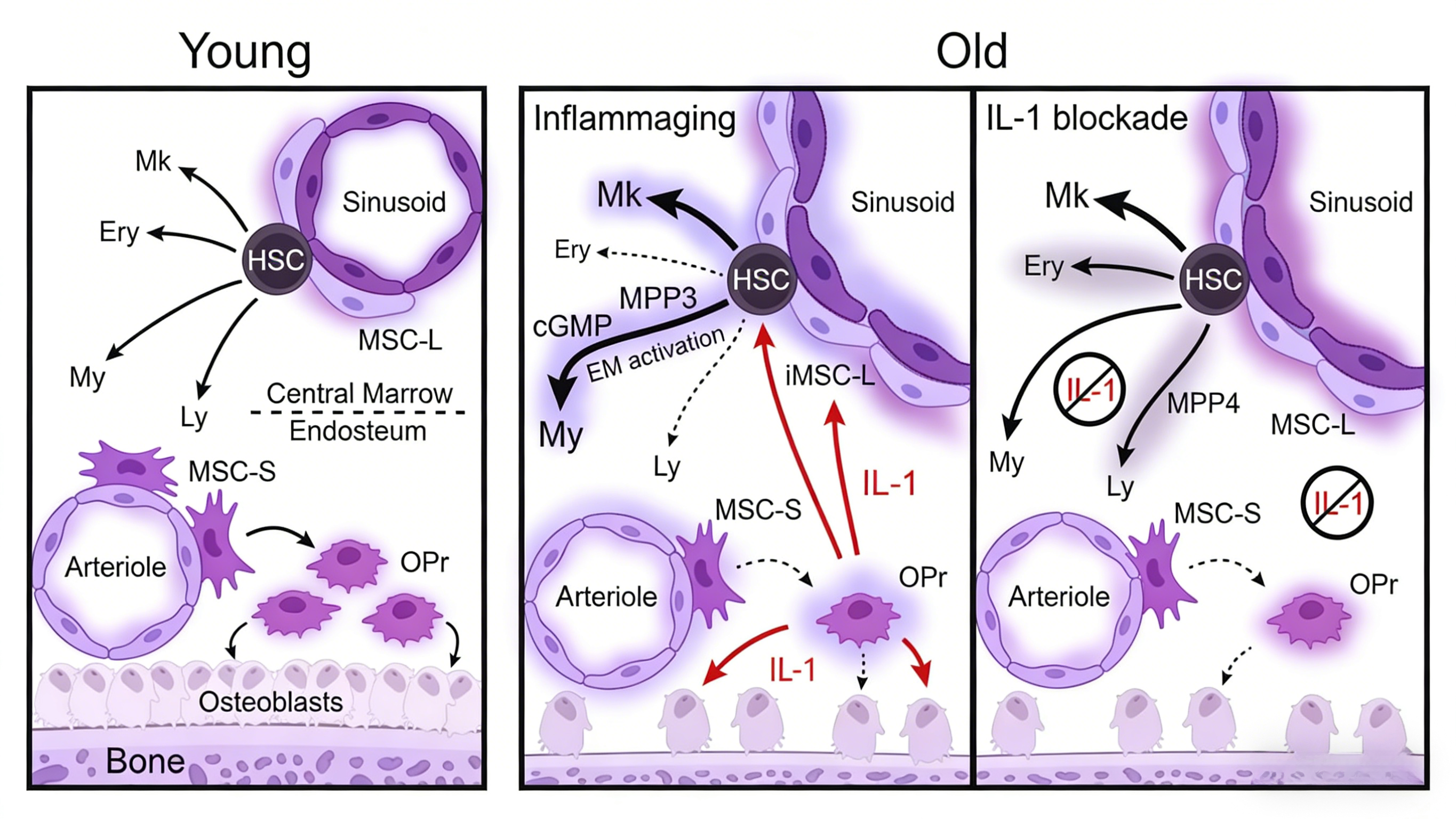
III. Production and Regulatory Mechanisms of IL-1β
(1) Cellular Sources
IL-1β is primarily produced by sentinel cells of the innate immune system, including monocytes and macrophages. Additionally, epithelial cells, endothelial cells, fibroblasts, synovial cells, neurons, mast cells, as well as microglia and astrocytes can release IL-1β. IL-1β is released via unconventional secretory pathways, exerting its effects through paracrine or systemic secretion.
(2) Dual Regulation of Synthesis and Release
The production and release of IL-1β are strictly regulated, mainly involving the recognition of pathogen-associated molecular patterns (PAMPs) and damage-associated molecular patterns (DAMPs). PAMPs are carried by invading microorganisms, while DAMPs are endogenous ligands released by damaged or dying cells. Both mediate signal recognition through membrane-bound TLR receptors or intracellular NLR receptors. Bacterial infections often accompany tissue damage, leading to the release of host cell components, so PAMPs and DAMPs may synergistically participate in IL-1β release. Typical experimental models show that sequential treatment with LPS and ATP can rapidly induce IL-1β release from monocytes, macrophages, and dendritic cells.
The release process of IL-1β involves three key steps: (1) Synthesis of the biologically inactive or weakly active precursor pro-IL-1β; (2) Cleavage of pro-IL-1β by Caspase-1 to produce biologically active mature IL-1β; (3) Secretion of mature IL-1β into the extracellular environment.
(3) Multi-Level Negative Regulatory Mechanisms
Given the broad biological effects of IL-1β, its activity is strictly regulated at multiple levels: through NALP3 inflammasome regulation of Caspase-1 activation to control IL-1β processing; through the decoy receptor IL-1RII competitively binding IL-1; through the receptor antagonist IL-1RA blocking receptor binding; and by modulating the intensity of downstream signal transduction.
IV. Biological Functions of IL-1β
(1) Pro-Inflammatory Effects
As a key pro-inflammatory cytokine, IL-1β can induce the release of other pro-inflammatory mediators such as TNF-α and IL-6, activate the expression of vascular adhesion molecules like ICAM-1, and coordinate various downstream immune mechanisms. In vivo, IL-1β is primarily responsible for acute-phase responses, including fever, acute-phase protein synthesis, anorexia, and lethargy, constituting an essential part of the host's anti-infection defense.
(2) Regulation of Cellular Functions
IL-1β affects the functions of almost all cell types, regulating cell proliferation, differentiation, and apoptosis either alone or in synergy with other cytokines. It plays important roles in cellular defense, tissue repair, and remodeling, and participates in pain perception, inflammatory responses, and autoimmune processes. Additionally, IL-1β is involved in neuroprotective mechanisms.
V. Clinical Significance of IL-1β Detection
As a core regulator of inflammatory responses, IL-1β level detection holds significant value for disease diagnosis, activity assessment, and treatment monitoring. In clinical research, the Human IL-1β Kit (HICA) can be used to quantitatively measure IL-1β concentrations in patient serum, plasma, or local tissues, providing a basis for disease mechanism exploration and treatment strategy optimization.
Given the central role of IL-1β in various diseases, the application of IL-1 receptor antagonists has shown therapeutic effects in systemic juvenile arthritis, acute pancreatitis, autoinflammatory diseases, as well as lupus arthritis and osteoarthritis, further confirming the clinical value of targeting the IL-1β signaling pathway.
VI. Summary and Future Perspectives
As a core member of the IL-1 family, IL-1β plays a pivotal role in innate immune responses, inflammation regulation, and the pathogenesis of multiple diseases. Its production is strictly regulated at multiple levels, including PAMP/DAMP recognition, inflammasome activation, and Caspase-1 processing. Its biological effects encompass a wide range of areas, including fever, acute-phase responses, cellular function regulation, and tissue repair. Abnormal expression of IL-1β is closely associated with autoimmune diseases, infections, metabolic disorders, cardiovascular diseases, and tumors.
Future research could further explore the spatiotemporal-specific regulatory mechanisms of the IL-1β signaling network and develop more selective intervention strategies. Detection tools like the Human IL-1β Kit (HICA) will continue to play a supporting role in basic research, clinical diagnosis, and treatment monitoring, providing a technical foundation for a deeper understanding of IL-1β's biological functions and the optimization of clinical treatment plans.
VII. Which Manufacturers Provide the Human IL-1β Kit (HICA)?
Nanjing UA-Bio Technology Co., Ltd. (UA-Bio) has independently developed the "Human IL-1β Kit (HICA)", a high-performance analysis platform specifically designed for studying inflammasome activation and key pathways of innate immunity. This kit aims to accurately and efficiently quantify the immunobinding activity of human interleukin-1β (IL-1β) protein, providing stable and reliable standardized solutions for efficacy evaluation, mechanism research, and biomarker analysis in fields such as autoimmune diseases, inflammatory diseases, infection immunity, and antibody drug development.
| Core Product Advantages |
|---|
| High Purity and Complete Biological Activity: The kit's core components utilize high-purity, high-biological-activity human IL-1β protein validated through multi-dimensional quality control. This protein maintains the correct native conformation and full receptor (IL-1R1/IL-1RAcP) binding capacity, accurately simulating the pro-inflammatory signals and immune activation mediated by IL-1β under physiological conditions, ensuring the accuracy, reproducibility, and functional relevance of binding experimental data. |
| Exceptional Batch-to-Batch Consistency and Stability: Relying on an internationally leading recombinant protein expression platform and highly standardized purification processes, combined with a stringent release quality control system, the product exhibits outstanding long-term stability and excellent batch-to-batch consistency. This provides solid and reliable quality assurance for your long-term, continuous key experiments and high-throughput screening work. |
| Ready-to-Use Flexible Detection Platform: Based on an optimized enzyme-linked immunosorbent assay (ELISA) detection principle, this kit provides pre-coated strips, highly specific detection antibodies, standards, and a complete set of optimized buffer systems. It is simple and fast to operate, with high sensitivity and strong specificity, widely applicable to various research needs such as anti-IL-1β antibody/receptor antagonist screening, neutralization activity determination, competitive binding experiments, affinity analysis, and immunogenicity evaluation. |
| Complete Solutions and Professional Support: We provide thoroughly validated standard experimental protocols, typical dose-response curves, and detailed result interpretation guides to help you quickly establish stable and reproducible detection processes. Nanjing UA-Bio's professional technical team can offer comprehensive technical consultation and support for your research design, experimental optimization, and data analysis. |
Nanjing UA-Bio Technology Co., Ltd. remains committed to providing cutting-edge, high-quality core reagents and tools for immunology, cell therapy, and innovative drug development. For detailed technical parameters, validation data, or specific application inquiries regarding the "Human IL-1β Kit (HICA)" (Product No.: UA086052), please feel free to contact us.
This article is reviewed and published by the technical expert team of UA
Disclaimer: This article partially utilizes artificial intelligence assistance in its creation. If any content involves copyright or intellectual property issues, please let us know and we promise to verify and remove it as soon as possible.
Purchase recombinant protein, choose Nanjing UA-Bio
UA protein focuses on providing various protein reagents, raw materials, and services required for drug research and development, cell therapy, gene therapy, and basic scientific research, including drug target proteins, immune checkpoint proteins, cytokines, tool enzymes, customized protein expression, and full-length transmembrane protein development. Youai is committed to providing customers with high-quality products and professional services, and building a High-tech Biological Enterprise with International Competitiveness.







 Business license (three certificates in one)