




The Biological Functions and Research Value of Cyclic Adenosine Monophosphate (cAMP)


Cyclic adenosine monophosphate (cAMP), as an intracellular second messenger, plays a central regulatory role in life information transmission. It exists in trace amounts widely in animal, plant, and microbial cells, participating in the regulation of various biological processes such as substance metabolism, cell proliferation, differentiation, and survival.
- Recent Advances
- Product Information
I. Introduction
Cyclic adenosine monophosphate (cAMP), as an intracellular second messenger, plays a central regulatory role in life information transmission. It exists in trace amounts widely in animal and plant cells as well as microorganisms, participating in the regulation of various biological processes such as substance metabolism, cell proliferation, differentiation, and survival. Since its discovery, cAMP research has continuously deepened human understanding of life regulation mechanisms and provided important targets for disease diagnosis and drug development. This article systematically elaborates on the discovery history, biological functions, and significance of cAMP in health and disease, while introducing the research value of related detection technologies.
II. Discovery and Scientific Significance of cAMP
(1) Proposal of the Second Messenger Concept
In the early 20th century, scientists had recognized the existence of small-molecule informational substances synthesized and released by glandular cells and others outside the cell. These substances rely on body fluids for information transmission and were referred to as the "first messengers" of life. However, subsequent research revealed that first messengers do not directly participate in cellular substance and energy metabolism but instead transmit information to intracellular signaling molecules, thereby regulating cell function. Based on this discovery, cAMP was identified as the "second messenger" of life information transmission.
(2) Scientific Contributions of cAMP Research
The discovery of cAMP and the proposal of the second messenger concept have greatly advanced the development of life sciences. This breakthrough work has deepened human understanding of cell signal transduction mechanisms to the molecular level, laying the foundation for numerous subsequent research efforts. Further studies have revealed that cAMP plays an important role in the nervous system, participating in brain cell function regulation, the conversion of short-term to long-term memory, and the delay of brain cell aging. These findings have made cAMP research a cornerstone in the field of cell signal transduction.
III. Synthesis and Biological Functions of cAMP
(1) Synthesis Pathway
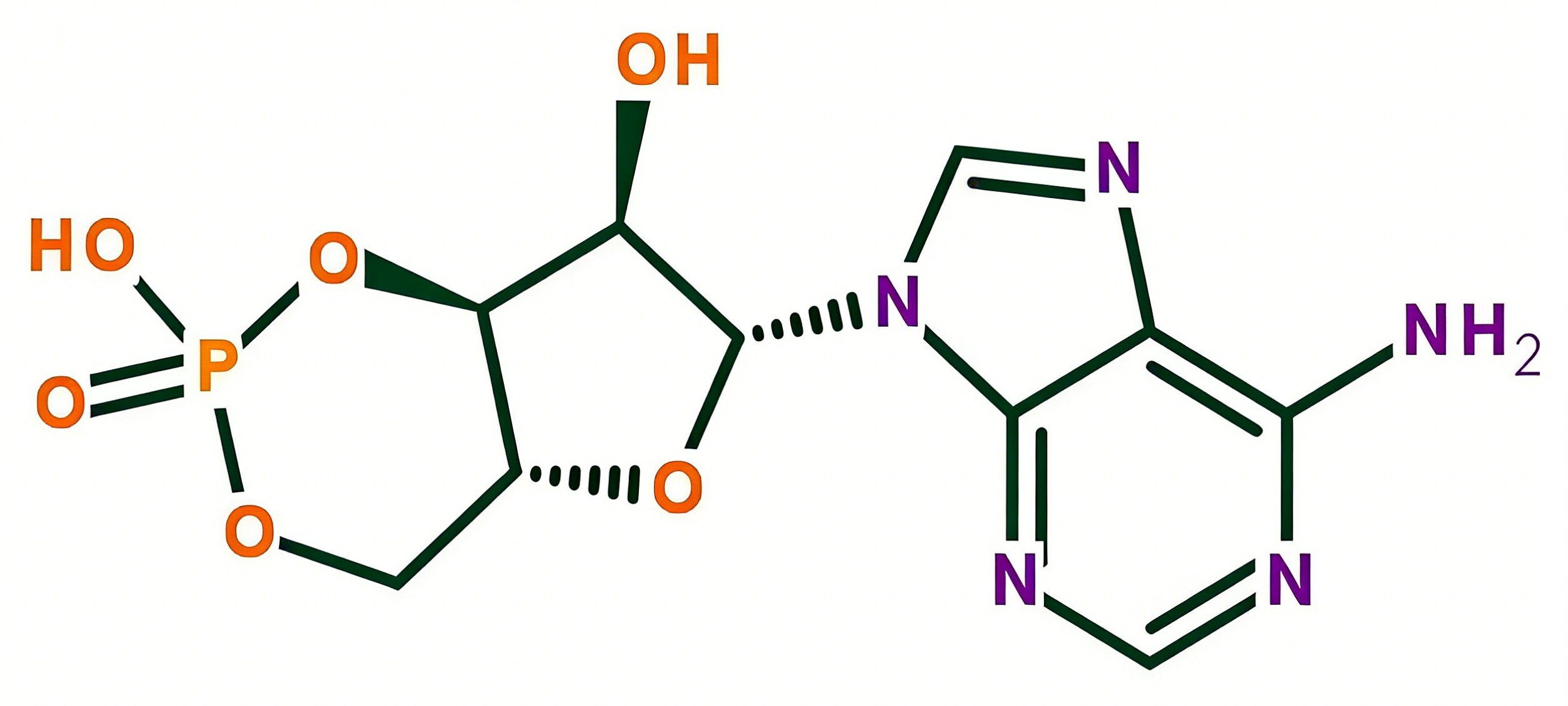
cAMP is generated from adenosine triphosphate (ATP) under the catalysis of adenylate cyclase. The intracellular cAMP concentration is regulated by various hormones and neurotransmitters. These first messengers precisely control the transient rise and rapid decline of cAMP by activating or inhibiting adenylate cyclase activity, thereby achieving spatiotemporal regulation of signals.
(2) Core Biological Functions
As a second messenger of hormones, cAMP performs various regulatory roles within cells:
1. Regulation of Substance and Energy Metabolism: cAMP participates in the regulation of sugar, fat, and nucleic acid metabolism. By activating effector molecules such as protein kinase A (PKA), it regulates the activity of key metabolic enzymes, affecting glucose uptake and utilization, fat storage, and mobilization.
2. Regulation of Cardiovascular Function: cAMP can alter cell membrane function, promote calcium ion entry into muscle fibers from the sarcoplasmic reticulum, and enhance myocardial contractility. It also activates respiratory chain oxidases, improving myocardial hypoxia, and plays a vital role in maintaining cardiovascular function.
3. Regulation of Cell Proliferation and Differentiation: cAMP is a key signaling molecule controlling cell proliferation, differentiation, and survival. By regulating gene transcription and the activity of intracellular metabolic system enzymes, it participates in various stages of the cell life cycle.
4. Regulation of Neural Function: In the nervous system, cAMP is involved in brain cell activation, function regulation, and memory formation, playing a significant role in maintaining normal cognitive function.
IV. Relationship Between cAMP and Disease
(1) Pathological Significance of cAMP Deficiency
When cAMP levels in the body are insufficient, cellular biological metabolism weakens, metabolic rates slow, and cell repair functions decline, ultimately leading to cell aging and tissue function deterioration. Studies have shown that cAMP deficiency is associated with over 40 diseases, involving multiple systems:
Hematological Diseases: including leukemia, anemia, allergic purpura, etc.;
Immune System Diseases: such as immunodeficiency, allergic reactions, allergic urticaria, etc.;
Circulatory System Diseases: involving cerebral thrombosis, angina pectoris, coronary heart disease, etc.;
Nervous System Diseases: including Alzheimer's disease, memory decline, neurological disorders, insomnia, and sleep disturbances;
Other Diseases: such as hepatitis, psoriasis, premature aging, etc.
(2) cAMP as a Target for Disease Intervention
These findings suggest that maintaining cAMP homeostasis is crucial for overall health. Drugs and intervention strategies that regulate cAMP levels have potential applications in the treatment of various diseases, making them an important direction for drug development.
V. Research Value of cAMP Detection Technologies
(1) Need for Quantitative Detection
Given the central role of cAMP in cell signal transduction and disease pathogenesis, accurate quantification of intracellular cAMP concentration is of great significance for basic research and drug screening. Traditional detection methods suffer from limitations such as complex operations and low throughput, making them unsuitable for modern research needs.
(2) Application of Advanced Detection Technologies
Detection methods based on time-resolved fluorescence resonance energy transfer (TR-FRET) technology provide an efficient solution for cAMP quantification. Representative detection tools such as the cAMP HiRange TR-FRET Assay Kit employ a competitive immunoassay model, measuring the energy transfer efficiency between donor and acceptor to achieve rapid, sensitive, and high-throughput quantification of cAMP concentration. Its wide dynamic range design covers nanomolar to micromolar levels of cAMP, making it particularly suitable for studying inhibitory G protein-coupled receptor functions and monitoring wide fluctuations in cAMP levels.
VI. Which Manufacturers Provide the cAMP HiRange TR-FRET Assay Kit?
Nanjing UA-Bio Technology Co., Ltd. (UA-Bio) has independently developed the "UniOne® TR-FRET cAMP HiRange Assay Kit", a high-performance analysis platform specifically designed for G protein-coupled receptor (GPCR) research and drug screening. This kit, based on time-resolved fluorescence resonance energy transfer (TR-FRET) technology, aims to accurately and efficiently quantify changes in intracellular cyclic adenosine monophosphate (cAMP) levels. It provides a stable and reliable standardized solution for GPCR signal transduction mechanism research, agonist/antagonist high-throughput screening, and pharmacological efficacy evaluation.
| Core Advantages of the Product |
|---|
| Ultra-Wide Detection Range and High Sensitivity: This kit uses an optimized competitive immunoassay principle, specially designed for high-concentration cAMP detection scenarios. It features an ultra-wide dynamic detection range (HiRange), covering cAMP concentration changes from low basal levels to high stimulation levels while maintaining excellent detection sensitivity. It is particularly suitable for studying potent agonists, high-concentration compound screening, and in-depth analysis of Gs/Gi signaling pathways. |
| Exceptional Inter-Batch Consistency and Stability: Relying on an internationally leading TR-FRET technology platform and strict standardized production processes, combined with multiple quality control verifications, the kit components (including fluorescent donor/acceptor labels, antibodies, and standards) exhibit high purity, excellent long-term stability, and outstanding inter-batch consistency. It provides solid and reliable quality assurance for long-term and continuous drug screening and mechanism research. |
| Homogeneous, Wash-Free, Flexible, and Efficient Detection Mode: This kit adopts a simple "add-incubate-read" homogeneous operation mode, eliminating tedious washing steps, greatly shortening the experimental process, and reducing operational errors. Its optimized formulation system is compatible with multi-well plate (96/384-well) automation platforms, making it flexible for various application scenarios such as high-throughput screening, signal pathway analysis, and pharmacological evaluation. |
| Complete Solution and Professional Support: We provide detailed and optimized standard experimental protocols, typical dose-response curves, and comprehensive result interpretation guidelines to help you quickly establish stable and reproducible detection processes. Nanjing UA-Bio's professional technical team offers full-process, professional technical consultation and support for your research design, experimental optimization, and data analysis. |
Nanjing UA-Bio Technology Co., Ltd. is always committed to providing cutting-edge, high-quality core reagents and tools for immunology, cell therapy, and innovative drug development. For detailed technical parameters, validation data, or specific application consultations regarding the "UniOne® TR-FRET cAMP HiRange Assay Kit" (Catalog No.: UA086053), please feel free to contact us.
This article is reviewed and published by the technical expert team of UA
Disclaimer: This article partially utilizes artificial intelligence assistance in its creation. If any content involves copyright or intellectual property issues, please let us know and we promise to verify and remove it as soon as possible.
Purchase recombinant protein, choose Nanjing UA-Bio
UA protein focuses on providing various protein reagents, raw materials, and services required for drug research and development, cell therapy, gene therapy, and basic scientific research, including drug target proteins, immune checkpoint proteins, cytokines, tool enzymes, customized protein expression, and full-length transmembrane protein development. Youai is committed to providing customers with high-quality products and professional services, and building a High-tech Biological Enterprise with International Competitiveness.







 Business license (three certificates in one)