




Unveiling the Mysteries of MSI and MMR: Key Biomarkers in Tumor Immunotherapy


Microsatellite instability (MSI) is a crucial molecular biomarker in multiple solid tumors, including colorectal cancer, gastric cancer, and endometrial cancer, and it holds several clinical significances. The occurrence of MSI is closely associated with the abnormal function of the mismatch repair system (MMR).
- Recent Advances
- Product Information
Microsatellite instability (MSI) is a very important molecular biomarker in multiple solid tumors such as colorectal cancer, gastric cancer, and endometrial cancer, and it has several clinical significances. The occurrence of MSI is closely related to the abnormal function of the mismatch repair system (MMR).
MSI
Microsatellite (MS), as a DNA sequence in the cellular genome that is tandemly repeated in units of a few nucleotides (usually 1 - 6 nucleotides), is like a specific melody in the genomic movement. However, during the process of tumor development, this melody may be disrupted, and the phenomenon of microsatellite instability (MSI) follows. Compared with normal tissues, the microsatellites in tumor cells change in length due to the insertion or deletion of repeat units, generating new microsatellite alleles. The appearance of this "unstable note" lays the groundwork for the development of tumors.
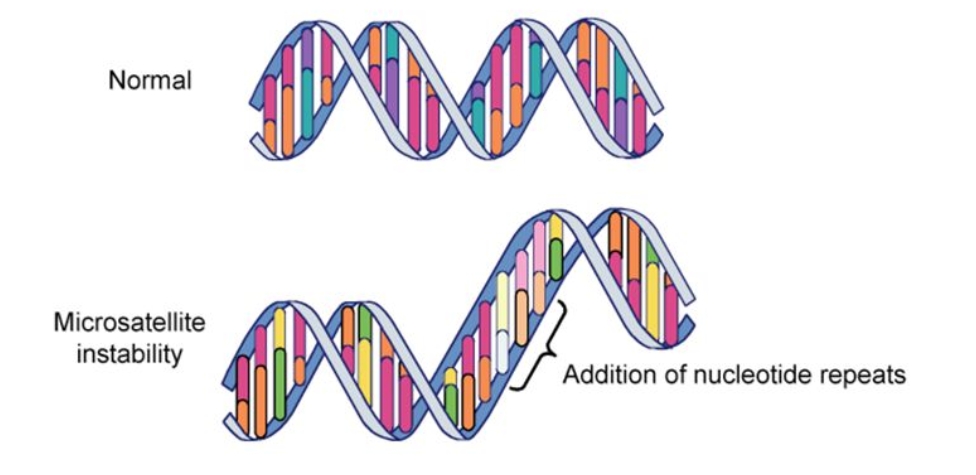
MSI can be classified into three categories according to the degree, presenting different levels of "disorder". Microsatellite high instability (MSI-H) means that the instability in the genome occurs frequently, usually with an occurrence frequency higher than 30%, and at least 2 microsatellite loci show instability; Microsatellite low instability (MSI-L) indicates that the instability occurs relatively less frequently, with a frequency lower than 30%, and only 1 microsatellite locus is abnormal; While microsatellite stability (MSS) implies that the microsatellites in the genome maintain a relatively stable state without obvious instability. Among many solid tumors, endometrial cancer, gastric cancer, and colorectal cancer, etc., all have a certain proportion of MSI-H incidence rates. For example, the incidence rate of endometrial cancer is between 20% - 30%, that of gastric cancer is 15% - 20%, and for colorectal cancer, it is 12% - 15% in general, and about 4% - 5% for stage IV colorectal cancer. These data reveal the widespread existence and importance of MSI in the field of oncology.
MMR
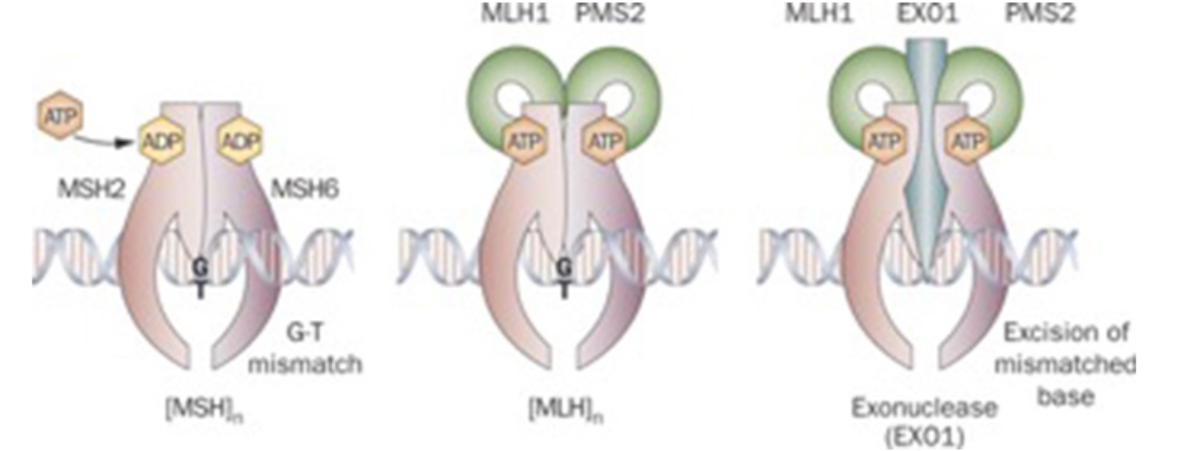
The Mismatch Repair (MMR) system is like a loyal guardian of the genome, always safeguarding the accuracy of DNA replication. In the complex and precise process of DNA replication, it is inevitable that some small mismatching errors will occur. At this time, the MMR system will act quickly. This system is mainly composed of key proteins such as MLH1, MSH2, MSH6, and PMS2. They work in coordination, just like a well-trained maintenance team, which can accurately identify the errors occurring during DNA replication, cut them off, and then synthesize new correct DNA strands to ensure the accurate transmission of genetic information and the stability of the genome.
According to the expression patterns of the MMR gene family proteins (MLH1, MSH2, MSH6, PMS2), MMR can be divided into two categories: mismatch repair deficiency (dMMR) and proficient mismatch repair (pMMR). When there is a lack of expression of mismatch repair proteins, it will lead to dMMR, and then the genome will lose its effective "error correction" ability. The formation mechanism of dMMR is relatively complex. It may be caused by germline or somatic pathogenic mutations of MMR genes (MLH1, MSH2, MSH6, PMS2), or it may be due to the deletion of the EPCAM gene leading to the hypermethylation of the MSH2 promoter, causing the silencing of the MSH2 gene expression, or the hypermethylation of the MLH1 promoter region resulting in the lack of MLH1 expression.
The Intrinsic Relationship between MSI and MMR
There is a close and delicate relationship between the MMR system and MSI. As a safety guarantee system for DNA replication, the main responsibility of the MMR system is to maintain the integrity and stability of genetic material. And microsatellites, as special sequences in the genome, are easily affected by various factors during DNA replication. When the MMR system has functional defects (dMMR) due to various reasons, it cannot correct the insertion or deletion errors of microsatellite repeat units during the replication process in a timely manner, thus leading to changes in microsatellite length and triggering MSI. It can be said that dMMR is the cause and MSI-H is the effect, and the causal relationship between the two plays a crucial role in the occurrence and development of tumors. Generally, dMMR corresponds to the MSI-H phenotype, while pMMR corresponds to the MSI-L or MSS phenotype.
From the perspective of detection, MMR detects the expression of related proteins, while MSI detects the changes in DNA sequences. Although the two are closely related, due to the difference in detection objects, there is also a certain degree of inconsistency between them. This is like observing the same thing from different angles, which are related but have different emphases.
Conclusion
As key biomarkers in tumor immunotherapy, in-depth research on MSI and MMR not only helps us to understand the occurrence and development mechanism of tumors more clearly but also provides important evidence for the precise diagnosis, personalized treatment, and prognosis evaluation of tumors. With the continuous in-depth research, it is expected that the understanding of MSI and MMR will be continuously improved, bringing more treatment hopes and better survival prospects for tumor patients.
This article is reviewed and published by the technical expert team of UA
Disclaimer: This article partially utilizes artificial intelligence assistance in its creation. If any content involves copyright or intellectual property issues, please let us know and we promise to verify and remove it as soon as possible.
Purchase recombinant protein, choose Nanjing UA-Bio
UA protein focuses on providing various protein reagents, raw materials, and services required for drug research and development, cell therapy, gene therapy, and basic scientific research, including drug target proteins, immune checkpoint proteins, cytokines, tool enzymes, customized protein expression, and full-length transmembrane protein development. Youai is committed to providing customers with high-quality products and professional services, and building a High-tech Biological Enterprise with International Competitiveness.







 Business license (three certificates in one)