

Patent Granted丨His-SUMO Magic Makes Mass Production of HPV18 E7 Protein a Reality —— Empowering Cervical Cancer Research with Patent Technology


UA BIOSCIENCE has introduced the Human Papillomavirus Type 18 E7 Protein (UA030080), prepared using patented national technology (Publication No.: CN117777313A). Through His-SUMO tag-induced soluble expression and affinity chromatography purification processes, it successfully addresses industry challenges such as low soluble expression levels of HPV18 E7 protein and the inclusion of large molecular tags in traditional technologies.
- Recent Advances
- Product Information
- Reference
【Patent Support】National Invention Patent Technology, Quality Assurance
UA BIOSCIENCE has introduced the Human Papillomavirus Type 18 E7 Protein (UA030080), prepared using national invention patent technology (Application Publication No.: CN117777313A). Through His-SUMO tag-induced soluble expression and affinity chromatography purification, the technology successfully addresses industry challenges such as low soluble expression levels of HPV18 E7 protein and the inclusion of large molecular tags in traditional methods.
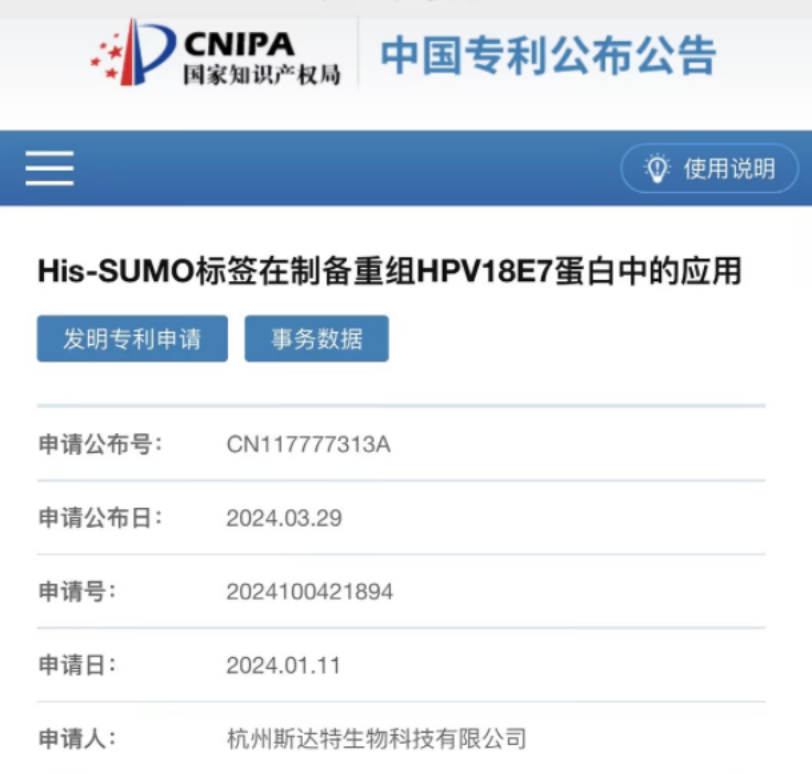
Core Advantages of Patent Technology:
- ✅ Tag-Free Native Sequence: Utilizes tag cleavage technology to obtain native HPV18 E7 protein without extra amino acid sequences (No Tag).
- ✅ Ultra-High Purity: SDS-PAGE shows clear single bands with purity up to 99%.
- ✅ High Yield and Efficiency: Yield reaches 20.5 mg/L with good reproducibility, suitable for large-scale production.
- ✅ High Activity Retention: Fully retains the interaction activity of E7 protein with tumor suppressors like pRB.
【Scientific Background】 E7—A Key Target in Cervical Cancer Research
Human Papillomavirus (HPV) is the primary causative factor of cervical cancer in women worldwide, with HPV16 and HPV18 being the most common high-risk types, accounting for approximately 90% of cervical cancers containing high-risk HPV DNA.
Molecular Mechanisms of E7 Oncoprotein
E7 is a small nuclear phosphoprotein whose primary carcinogenic mechanism involves binding to and inactivating the retinoblastoma protein (pRb).
Beyond the classic pRb pathway, recent studies have revealed a more complex carcinogenic network of E7:
- Activation of Signaling Pathways: E7 can activate AKT and Src kinase signaling pathways. Studies show that sustained expression of HPV16 E7 promotes p-AKT and p-Src expression, driving the progression of cervical precancerous lesions to invasive cancer. E7 also upregulates AKT activity, altering the subcellular localization of p21Cip1 and p27Kip1, promoting cell proliferation and metastasis.
- Induction of Epigenetic Modifications: E7 remodels the host cell epigenome through various mechanisms. For example, E7 upregulates DNA methyltransferase expression, leading to promoter methylation of specific genes and silencing of tumor suppressor genes. E7 also interacts with histone deacetylases and affects histone methyltransferase activity, resulting in the silencing of immune-related genes and aiding tumor immune evasion.
- Induction of Genomic Instability and Epithelial-Mesenchymal Transition: E7 expression can induce replication stress and genomic damage in host cells, promoting malignant progression. Additionally, E7 synergizes with E6 to upregulate transcription factors like SLUG, SNAIL, and TWIST, inducing epithelial-mesenchymal transition, a critical step in tumor invasion and metastasis.
Advantages of E7 as a Therapeutic Target
E7 is an ideal therapeutic target for several reasons:
- Tumor-Specific Expression: E7 is a viral gene absent in normal human cells. Targeting E7 achieves high tumor specificity with minimal off-target toxicity.
- Essential for Carcinogenesis: Sustained E7 expression is critical for maintaining the malignant phenotype of cervical cancer. Studies indicate that inhibiting or clearing E7 halts tumor cell proliferation and induces apoptosis.
- "Oncogene Addiction": Cancer cells' dependence on E7 makes it an "Achilles' heel." Targeting E7 precisely strikes tumor cells while reactivating tumor suppressor pathways like pRb.
Advances in E7-Targeted Therapeutic Strategies
Recent years have seen rapid development in E7-targeted therapies, including:
4.1 Immunotherapy
Therapeutic vaccines and immunotherapies aim to break immune tolerance to HPV and induce E7-specific cytotoxic T-cell responses. Although early therapeutic vaccines showed limited clinical efficacy, novel vaccine vectors and combination strategies with immune modulators are under exploration.
4.2 Gene Editing Technologies
CRISPR/Cas9: Specific guide RNAs direct Cas9 nuclease to cleave the E7 gene, inducing frameshift mutations and permanently disrupting E7 function. Studies show CRISPR/Cas9-mediated E7 knockout effectively inhibits cervical cancer cell proliferation and induces apoptosis.
RNA Interference: Small interfering RNAs or short hairpin RNAs silence E7 mRNA, a widely studied strategy. While delivery efficiency and stability remain challenges, advances in lipid nanoparticles and other delivery systems are driving progress.
4.3 Novel Drugs and Delivery Systems
Affitoxins: These are novel targeted drugs similar to antibody-drug conjugates. Researchers developed bispecific affitoxins targeting both HPV16 and HPV18 E7 proteins, fused with granzyme B. These bispecific affitoxins not only inhibit tumor growth but also reverse epithelial-mesenchymal transition, showing significant antitumor activity and safety in animal models.
Small-Molecule Inhibitors: Virtual screening has identified natural compounds like Neoechinulin as potential E7 inhibitors, blocking its interaction with pRb.
4.4 Targeting E7 Stability
Beyond targeting E7 directly, disrupting its stability is effective. Studies show the host deubiquitinase USP7 binds E7, removing ubiquitin modifications and preventing proteasomal degradation. USP7 inhibitors like HBX 19818 significantly reduce E7 levels and inhibit proliferation, invasion, and transformation of HPV-positive cervical cancer cells.
4.5 Combination Therapies
Combination strategies based on E7 mechanisms show promise. For example, proteasome inhibitors (e.g., bortezomib) combined with histone deacetylase inhibitors (e.g., vorinostat) synergistically induce death in HPV-positive cervical cancer cells, partly by indirectly inhibiting E6/E7 and dual-blocking downstream pathways.
Table 1 | Major E7-Targeted Therapeutic Strategies and Mechanisms
| Therapeutic Strategy | Mechanism | Representative Drugs/Technologies |
|---|---|---|
| Immunotherapy | Activates T-cell-specific killing of E7-positive cells | Therapeutic vaccines |
| Gene Editing | Permanently disrupts E7 gene or silences its mRNA | CRISPR/Cas9, siRNA |
| Affitoxins | Targeted delivery of toxins to E7-positive cells | Bispecific GrB affitoxins |
| Small-Molecule Inhibitors | Blocks E7 protein function | Neoechinulin |
| Protein Stability Regulation | Inhibits deubiquitinases to promote E7 degradation | USP7 inhibitors (HBX 19818) |
Related Products:
| Catalog No. | Product Name |
|---|---|
| UA030080 | Human papillomavirus type 18 E7 Protein |
| UA030079 | Human papillomavirus type 16 E7 Protein |
This article is reviewed and published by the technical expert team of UA
Disclaimer: This article partially utilizes artificial intelligence assistance in its creation. If any content involves copyright or intellectual property issues, please let us know and we promise to verify and remove it as soon as possible.
Purchase recombinant protein, choose 
UA protein focuses on providing various protein reagents, raw materials, and services required for drug research and development, cell therapy, gene therapy, and basic scientific research, including drug target proteins, immune checkpoint proteins, cytokines, tool enzymes, customized protein expression, and full-length transmembrane protein development. Nanjing Univ is committed to providing customers with high-quality products and professional services, and building a High-tech Biological Enterprise with International Competitiveness.

- Gholami S, et al. Therapeutic targeting of the HPV E7 oncoprotein: Current advances and emerging strategies. Int Immunopharmacol. 2026
- HPV E6 and E7 oncoproteins: Uncovering novel mechanisms in cancer development. Biochem Soc Trans. 2025
- Younas S, et al. Identification of novel therapeutic inhibitors against E6 and E7 oncogenes of HPV-16 associated with cervical cancer. PLoS One. 2025
- Lin Z, et al. Sustained Expression of HPV16 E7 Oncoprotein Promotes p-AKT/p-Src Signalling to Drive Precancerous Lesions to Invasive Cervical Cancer. Carcinogenesis. 2022
- A novel bispecific affitoxin simultaneously targeting E7 of HPV16/18 types. Springer. 2025
- Ranasinghe V, McMillan N. Novel therapeutic strategies for targeting E6 and E7 oncoproteins in cervical cancer. Crit Rev Oncol Hematol. 2025
- Xia C, et al. The ubiquitin specific protease 7 stabilizes HPV16E7 to promote HPV-mediated carcinogenesis. Cell Mol Life Sci. 2023
- Lin Z, et al. Combination of proteasome and HDAC inhibitors for uterine cervical cancer treatment. Clin Cancer Res. 2009
- Drugs and drug targets for the treatment of HPV-positive cervical cancer. SciDir. 2024






 Business license (three certificates in one)