ActRII Target: The "Gold Mine" for Next-Generation Fat-Reducing and Muscle-Enhancing Drug Development


In the field of metabolic disease treatment, the Activin Type II Receptor (ActRII) is emerging as a focal point of competition among global pharmaceutical companies. As a core member of the TGF-β superfamily, ActRII regulates the metabolic balance between fat and muscle, offering a novel therapeutic paradigm for metabolic disorders such as obesity and sarcopenia. With major players like Eli Lilly, Merck, and China's innovative biopharma companies such as Laekna Therapeutics making significant investments, the ActRII target is propelling metabolic drug research into a new era of "simultaneous fat reduction and muscle enhancement."
- Recent Advances
- Product Information
- Reference
ActRII Target
In the field of metabolic disease treatment, the Activin Type II Receptor (ActRII) is emerging as a focal point of competition among global pharmaceutical companies. As a core member of the TGF-β superfamily, ActRII regulates the metabolic balance between fat and muscle, offering a novel therapeutic paradigm for metabolic disorders such as obesity and sarcopenia. With major players like Eli Lilly, Merck, and China's innovative biopharma companies such as Laekna Therapeutics making significant investments, the ActRII target is propelling metabolic drug research into a new era of "simultaneous fat reduction and muscle enhancement."
I. Biological Mechanism of ActRII: The "Master Switch" for Fat and Muscle Metabolism
The ActRII family comprises two subtypes, ActRIIA and ActRIIB, which are widely distributed in adipose tissue, skeletal muscle, bone, and other tissues. Its signaling mechanism exhibits dual regulatory properties:
-
Adipose Metabolism: In adipocytes, activin signaling through ActRII activates the Smad2/3 pathway, promoting lipid synthesis and storage, leading to visceral fat accumulation.
-
Muscle Metabolism: In skeletal muscle, ActRII signaling inhibits the differentiation of muscle satellite cells and activates the ubiquitin-proteasome system, accelerating muscle protein degradation and ultimately causing muscle atrophy.
Preclinical studies demonstrate that blocking ActRII signaling can significantly increase skeletal muscle mass in mice (by up to 40%) while reducing fat content (by up to 30%). This dual benefit mechanism positions ActRII as an ideal target to address the muscle loss side effect associated with GLP-1 class drugs.
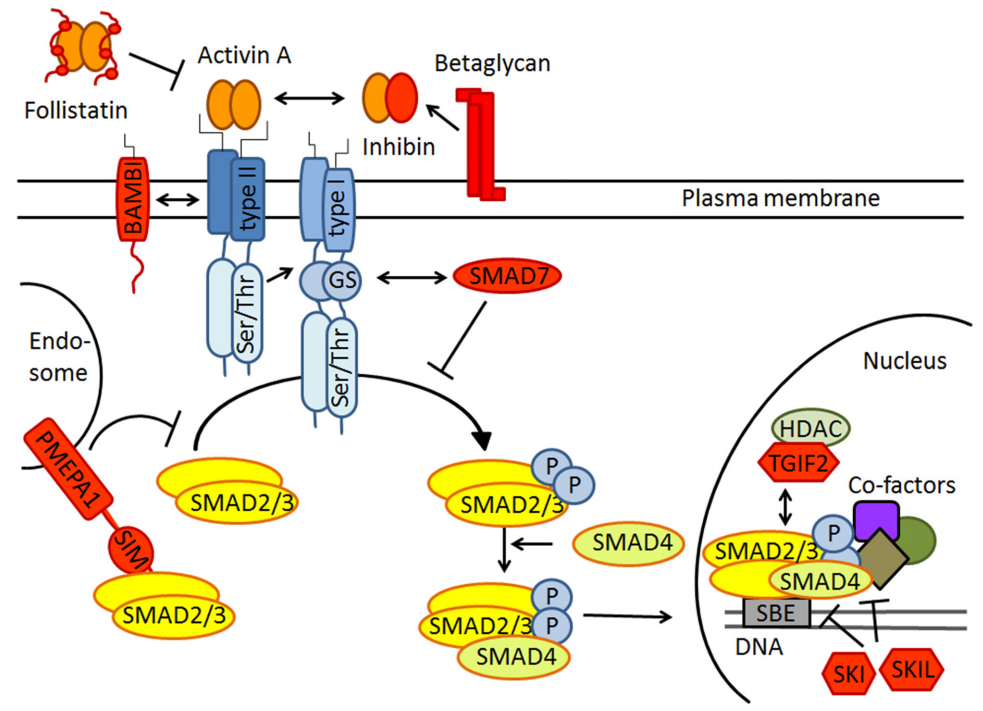
Typical Activin Receptor Signaling via SMAD2/3 Protein Pathway Schematic
II. Market Outlook: On the Eve of Explosion in a $10 Billion+ Therapeutic Arena
Indication Expansion: From Obesity to Chronic Disease Management
The potential of ActRII inhibitors extends far beyond weight loss:
- Sarcopenia: Bimagrumab demonstrated significant improvements in muscle strength and physical function in sarcopenic patients aged 75+.
- Heart Failure: Preclinical studies showed reversal of cardiac dysfunction in heart failure mouse models.
- Type 2 Diabetes: Potential as an adjuvant therapy by enhancing insulin sensitivity in adipose tissue and skeletal muscle.
Competitive Landscape: Battle Between Pharma Giants and Emerging Players
Six ActRII inhibitors have entered clinical development globally:
- Eli Lilly: Bimagrumab leads in obesity indications; a Phase II trial combining it with tirzepatide for simultaneous muscle gain and fat loss has been initiated.
- Merck & Co.: Sotatercept (ActRIIA-Fc fusion protein) approved for pulmonary arterial hypertension.
- Laekna Therapeutics: LAE102 positioned as the first ActRIIA monoclonal antibody with significant BD partnership potential.
- Startups: SixPeaks Bio developing ActRIIA/B bispecific antibodies conjugated with GLP-1 peptides to maximize "fat reduction + muscle preservation" efficacy.
Market Size Projections
Evaluate Pharma forecasts the ActRII inhibitor market to
exceed 20 billion.
The rise of ActRII targets signifies a paradigm shift in metabolic disease treatment. By precisely balancing fat and muscle metabolism, ActRII inhibitors address the muscle loss limitation of GLP-1 therapies while pioneering a new paradigm of "high-quality weight loss." As clinical data emerges and commercialization accelerates, this golden target will reshape the global metabolic drug landscape, delivering revolutionary breakthroughs for human health.
UAI Biopharma's ActRII-Related Products Accelerating Drug Development
|
Small Molecule Drug Target Proteins & Screening Kits |
|
|
Catalog Numbers |
Product Names |
|
ActRIIA and ActRIIB Enzyme Activity Inhibitor Screening Kit |
|
|
ACVR2A GST Tag Protein, Human |
|
|
ACVR2B His&GST Tag Protein, Human |
|
|
UA-Glo Kinase ADP Assay |
|
|
UA-Glo Kinase ADP Max Assay Kit |
|
|
Large Molecule Drug Target Proteins |
|
|
Catalog Numbers |
Product Names |
|
ACVR2A Fc Chimera Protein, Human |
|
|
ACVR2A His Tag Protein, Human |
|
|
ACVR2A mFc Chimera Protein, Mouse |
|
|
ACVR2B Fc Chimera Protein, Human |
|
|
ACVR2B His Tag Protein, Human |
|
|
ACVR2B His Tag Protein, Mouse |
|
|
ACVR2B mFc Chimera Protein, Mouse |
|
|
Phospho-Protein Kit |
|
|
KIT-SMAD2P-500 |
Phospho-SMAD2 (S465/S467) |
|
KIT-SMAD3P-500 |
Phospho-SMAD3 (S423/S425) |
|
KIT-SMAD3T-500 |
Total SMAD3 |
Data Presentation (Partial):
ActRIIA and ActRIIB Enzyme Activity Inhibitor Screening Kit (UA080464)

ACVR2A Fc Chimera Protein, Human (UA010196)
|
|
|
|
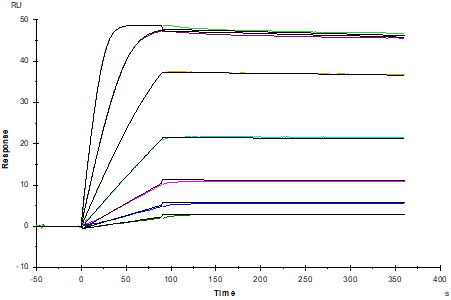
Protein A Chip captured ACVR2A Fc Chimera, Human (Cat. No. UA010196), can bind Recombinant Human/Mouse/Rat Activin A with an affinity constant of 4.70 pM as determined in SPR assay. |
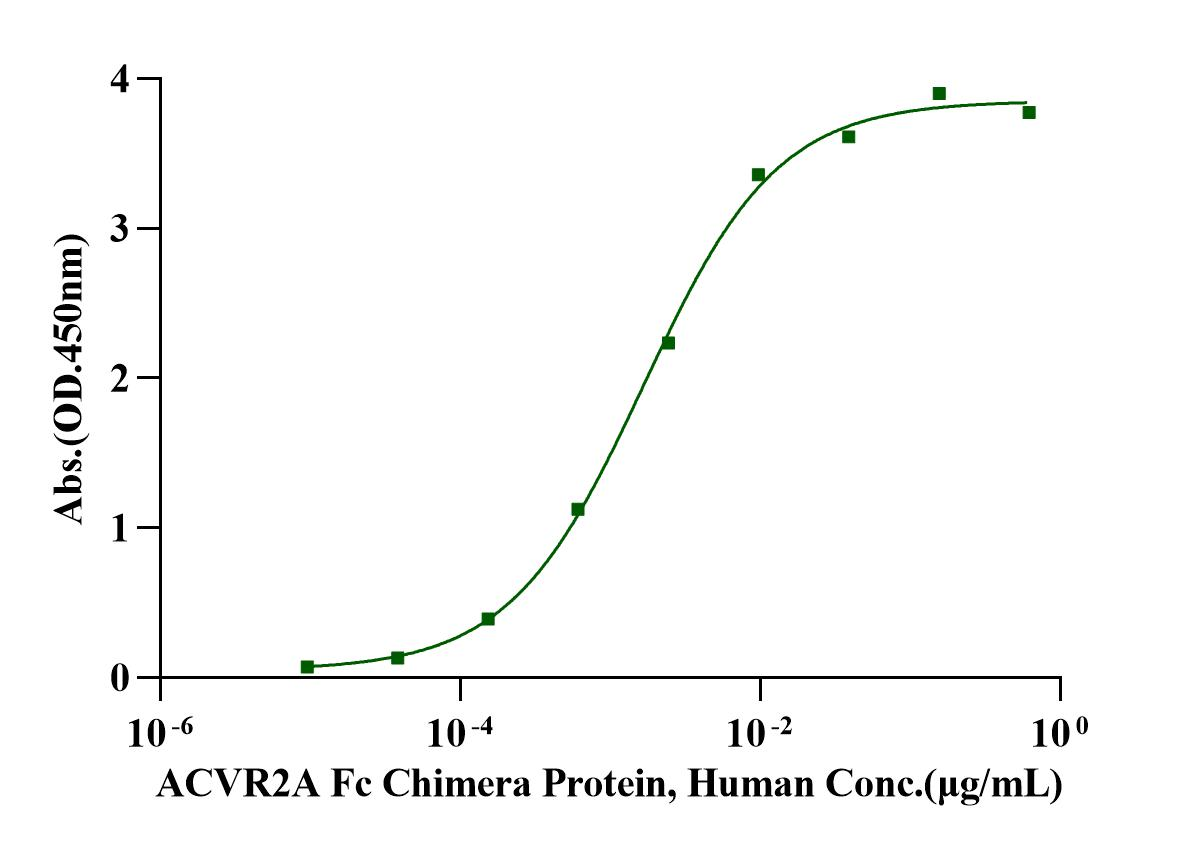
Immobilized Activin A Protein, Human/Mouse/Rat (Cat. No. UA040343) at 1.0μg/mL (100μL/well) can bind ACVR2A Fc Chimera Protein, Human (Cat. No. UA010196) with EC50 of 1.33-2.08ng/mL. |
Phospho-SMAD2 (KIT-SMAD2P-500)
Principle of THUNDER™ TR-FRET Assay
The THUNDER™ TR-FRET (Time-Resolved Fluorescence Resonance Energy Transfer) technology is based on the principles of Fluorescence Resonance Energy Transfer (FRET) and Time-Resolved Fluorescence (TRF). This method offers high sensitivity, excellent specificity, and does not require coating or washing steps, making it simple to operate with good reproducibility. It enables the detection of p-SMAD2 within just 2 hours.
After overnight culture of Hela cells (80,000 cells/well), the cells are serum-starved for 3 hours. Following treatment with compounds, the cells are lysed, and the lysates are transferred to an assay plate. Labeled antibodies, Eu-Ab1 and FR-Ab2, are added, and the mixture is incubated at room temperature for 2 hours to detect phospho-SMAD2 (S465/S467). The fluorescence readings at 665 nm and 615 nm are then measured using a microplate reader.
References:
- Xueling Cui; Shumi Shang; Xinran Lv; Jing Zhao; Yan Qi; et al. Perspectives of small molecule inhibitors of activin receptor‑like kinase in anti‑tumor treatment and stem cell differentiation. Molecular Medicine Reports.2019.
- Andrea Link; Fang Zheng; Christian Alzheimer. Activin Signaling in the Pathogenesis and Therapy of Neuropsychiatric Diseases. Frontiers in Molecular Neuroscience.2012.
- Abdullah Al Lawati; Ayman Alhabsi; R. Rahul; Manuela Savino; Hamed Alwahaibi; et al. Current and Emerging Parenteral and Peroral Medications forWeight Loss: A Narrative Review. Diseases.2025.
- Bérénice Segrestin; Blandine Gatta Cherifi. Obesity and its treatment: Toward new approaches. Annales d Endocrinologie.2025.
This article is reviewed and published by the technical expert team of UA
Disclaimer: This article partially utilizes artificial intelligence assistance in its creation. If any content involves copyright or intellectual property issues, please let us know and we promise to verify and remove it as soon as possible.
Purchase recombinant protein, choose 
UA protein focuses on providing various protein reagents, raw materials, and services required for drug research and development, cell therapy, gene therapy, and basic scientific research, including drug target proteins, immune checkpoint proteins, cytokines, tool enzymes, customized protein expression, and full-length transmembrane protein development. Nanjing Univ is committed to providing customers with high-quality products and professional services, and building a High-tech Biological Enterprise with International Competitiveness.

- Xueling Cui; Shumi Shang; Xinran Lv; Jing Zhao; Yan Qi; et al. Perspectives of small molecule inhibitors of activin receptor‑like kinase in anti‑tumor treatment and stem cell differentiation. Molecular Medicine Reports.2019.
- Andrea Link; Fang Zheng; Christian Alzheimer. Activin Signaling in the Pathogenesis and Therapy of Neuropsychiatric Diseases. Frontiers in Molecular Neuroscience.2012.
- Abdullah Al Lawati; Ayman Alhabsi; R. Rahul; Manuela Savino; Hamed Alwahaibi; et al. Current and Emerging Parenteral and Peroral Medications forWeight Loss: A Narrative Review. Diseases.2025.
- Bérénice Segrestin; Blandine Gatta Cherifi. Obesity and its treatment: Toward new approaches. Annales d Endocrinologie.2025.






 Business license (three certificates in one)