

pH-Sensitive Fluorescent Detection Reagents: 5-Minute Labeling for Efficient Capture of Antibody Internalization Signals


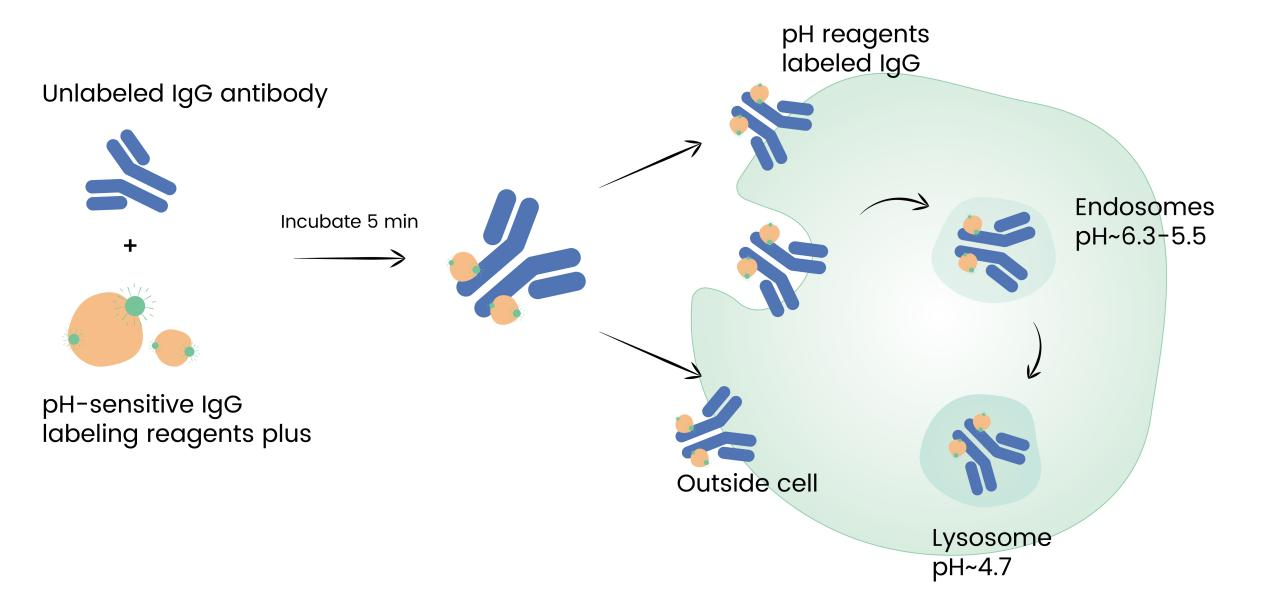
Under neutral pH conditions, pH-sensitive IgG labeling reagents exhibit minimal fluorescence emission. However, upon entering acidic environments (such as phagosomes or lysosomes), these dyes emit bright red or green fluorescence. This unique property enables pH-sensitive IgG labeling reagents to specifically label antibodies internalized by cells, eliminating the need for washing steps or quenching agents. Consequently, background fluorescence is significantly reduced, the signal-to-noise ratio is enhanced, and the accuracy and reliability of results are ensured. These reagents provide robust support for the development of antibody-drug conjugates (ADCs).
- Recent Advances
- Product Information
pH-Sensitive Fluorescent Detection Reagents: Precise Capture of Internalization and Phagocytosis Signals
Under neutral pH conditions, pH-sensitive IgG labeling reagents exhibit minimal fluorescence emission. However, upon entering acidic environments (such as phagosomes or lysosomes), these dyes emit bright red or green fluorescence. This unique property enables pH-sensitive IgG labeling reagents to specifically label antibodies internalized by cells, eliminating the need for washing steps or quenching agents. Consequently, background fluorescence is significantly reduced, the signal-to-noise ratio is enhanced, and the accuracy and reliability of results are ensured. These reagents provide robust support for the development of antibody-drug conjugates (ADCs).
Rapid Labeling: Streamlining Experimental Workflows and Boosting Efficiency
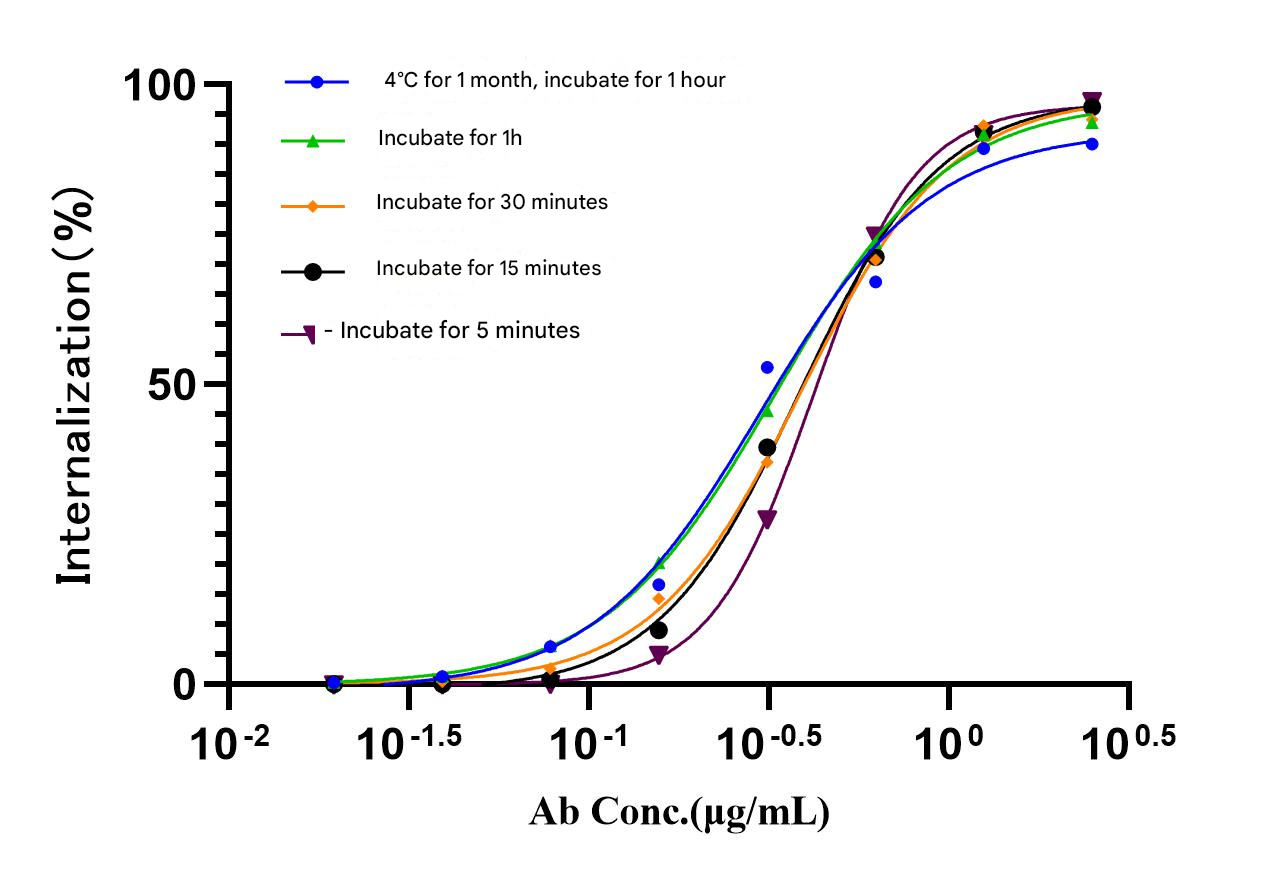
pH-sensitive IgG labeling reagents employ an innovative labeling technology that targets the Fc region of intact IgG primary antibodies via FC-binding proteins, forming labeled complexes within just 5 minutes. This non-covalent labeling method is not only rapid and efficient but also obviates the need for reagent purification, greatly simplifying the experimental workflow.
Flexible Options: Red and Green Fluorescence for Multiparametric Detection
The pH-sensitive IgG labeling reagents series offers both red and green fluorescent options, allowing researchers to flexibly select based on their experimental requirements.
User Testimonials: A Robust Backbone for Scientific Achievements
Since their launch, the pH-sensitive IgG labeling reagents series has garnered trust and acclaim from numerous researchers nationwide. Many users have reported that these reagents not only enhance the accuracy and efficiency of their experiments but also outperform similar imported products in terms of performance.
Comparison of Different Detection Methods:
|
Detection Method |
Advantages |
Disadvantages |
|
pH-sensitive IgG labeling reagents |
pH-Sensitive Fluorescence: Emits light only in acidic environments (such as phagosomes, lysosomes), resulting in low background fluorescence, a high signal-to-noise ratio, and accurate, reliable results. |
High Cost: The price may be higher compared to traditional fluorescent dyes. |
|
Easy Operation: Utilizes a non-covalent labeling technology that forms labeled complexes within 5 minutes, eliminating the need for reagent purification. |
||
|
Broad Applicability: Supports various antibody sources and types, making it suitable for a wide range of experimental scenarios. |
||
|
Multiparametric Detection: Offers both red and green fluorescent options, enabling multiparametric detection when combined with other fluorescent markers. |
||
|
Other internalization detection methods based on pH probes |
The principle is similar: the acidification degree of intracellular vesicles is reflected by the sensitivity of fluorescent probes to pH values. |
The specificity may be relatively low: some pH probes may not be able to label internalized antibodies as specifically as pH-sensitive IgG labeling reagents (ready-to-use). |
|
The operation is complex: additional steps may be required to label and detect the pH probe. |
||
|
Internalization Detection Based on Live-Cell Imaging (e.g., Incucyte) This translation accurately conveys the concept of using live-cell imaging systems, such as Incucyte, for internalization detection. |
Real-time detection: Live cells can be observed in real time, with continuous detection lasting up to 72 hours. |
High equipment requirements: Special equipment such as real-time live cell imagers is needed. |
|
Multiple concentration points and multiple time points mode: Suitable for real-time detection of antibody internalization pharmacodynamics. |
The operation is complex: Compared with pH-sensitive IgG labeling reagents (ready-to-use), there may be more steps involved. |
|
|
Toxin-Conjugated Cytotoxicity Assays for Internalization Detection (e.g., DT3C Method, Mab-ZAP Approach) This translation clearly indicates the use of toxin-conjugated assays for cytotoxicity-based internalization detection, specifically mentioning the DT3C method and Mab-ZAP approach as examples. |
Direct assessment of internalization: The internalization of antibodies is assessed through cell killing. |
The operation time is relatively long. |
|
Temperature-Transition-Based Fluorescent Secondary Antibody Internalization Assay This translation accurately captures the essence of the method, which relies on temperature changes to trigger or monitor the internalization process using fluorescent secondary antibodies. |
Distinguishing intracellular and extracellular fluorescence signals: Utilizing the changes in fluorescence intensity of fluorescent secondary antibodies at different temperatures to distinguish between intracellular and extracellular fluorescence signals. |
The operation is complex: It requires precise control of temperature, and may also be affected by other factors. |
|
The accuracy is limited: Compared with the pH sensitivity of pH-sensitive IgG labeling reagents (ready-to-use), the fluorescence signal based on temperature shift may be subject to more interferences. |
Recommended related products:
|
Part Number |
Product Name |
|
pH-sensitive IgG labeling reagents Max(Green) |
|
|
pH-sensitive lgG labeling reagents (Red) |
Partial Data Display:
|
pH-sensitive IgG labeling reagents Max(Green) |
pH-sensitive lgG labeling reagents (Red) |
|
|
|
|
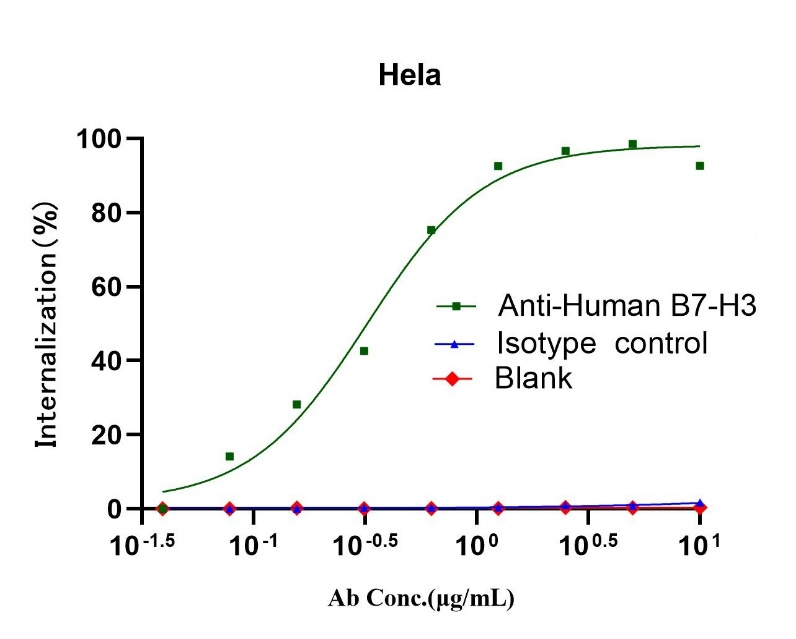
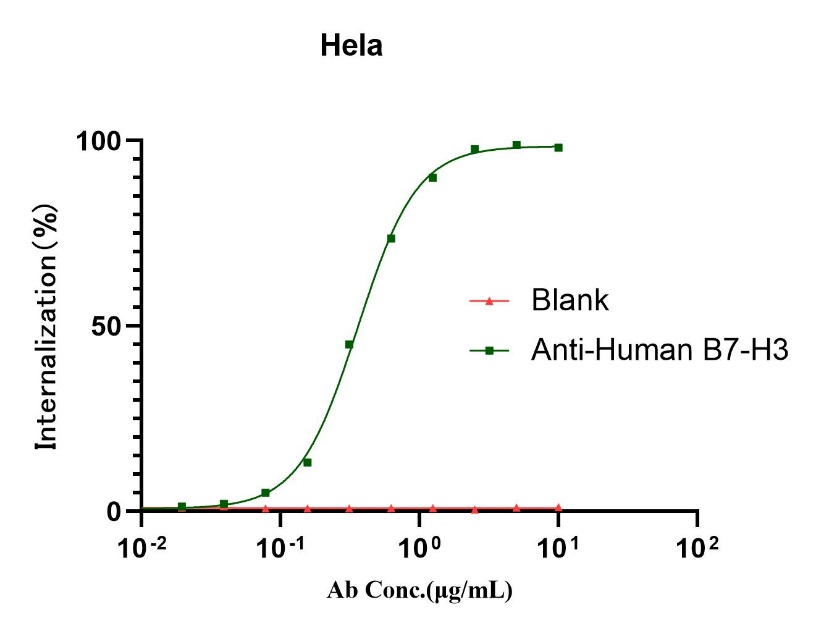
The fluorescent intensity from antibody-probe protein complex internalization into cell is specific for B7-H3 on Hela cell. |
The fluorescent intensity from antibody-probe protein complex internalization into cell is specific for B7-H3 on Hela cell. |
This article is reviewed and published by the technical expert team of UA
Disclaimer: This article partially utilizes artificial intelligence assistance in its creation. If any content involves copyright or intellectual property issues, please let us know and we promise to verify and remove it as soon as possible.
Purchase recombinant protein, choose 
UA protein focuses on providing various protein reagents, raw materials, and services required for drug research and development, cell therapy, gene therapy, and basic scientific research, including drug target proteins, immune checkpoint proteins, cytokines, tool enzymes, customized protein expression, and full-length transmembrane protein development. Nanjing Univ is committed to providing customers with high-quality products and professional services, and building a High-tech Biological Enterprise with International Competitiveness.







 Business license (three certificates in one)